The Design Cube is a makerspace at the College of Health Sciences, Makerere University, one of Africa’s most respected medical institutions. The Design Cube grew out of the Duke University-MakBME partnership, and today it brings together students, faculty, clinicians, and community innovators who want to design medical technologies for resource-constrained environments.
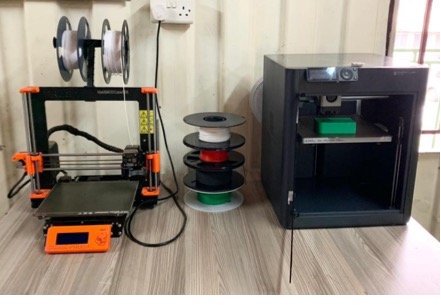
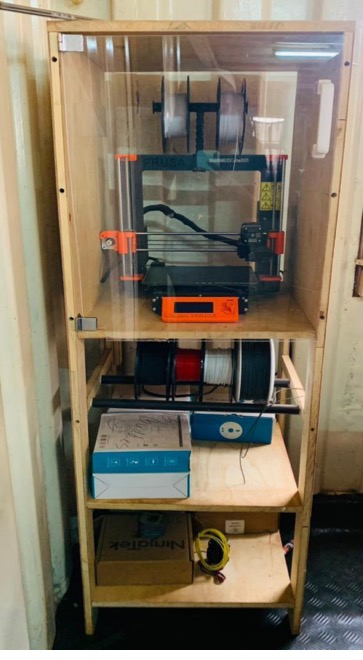
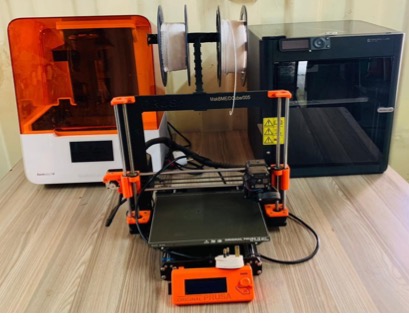
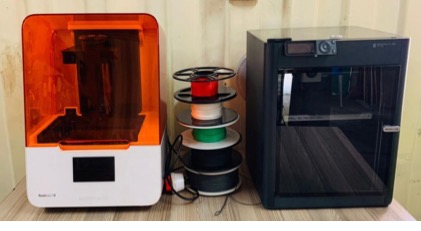
Inside the Design Cube, innovators get the space and tools to actually build things. There are fully equipped work areas, prototyping tools, and fabrication equipment including a Bambu Lab 3D printer, a Prusa 3D printer, and a resin printer along with mentors who stay with teams from the first sketch all the way to clinical implementation. Innovators work through every stage of Biodesign: identifying a real clinical need, applying human-centered design, building low-cost prototypes, testing and refining them, understanding regulatory pathways, drafting intellectual property documents, and eventually connecting with funders, accelerators, and commercialization partners. Every project is supported with one goal in mind of reaching the bedside.
Since it opened in 2022, the Design Cube has trained over sixty innovators through six Duke–Mak biodesign fellowship cohorts, and hundreds more through four courses of the undergraduate BME Design courses, community programs with high school students, and hands-on training at the college level. Its network has grown to include over ten international universities, all of whom see the Cube as a genuinely effective place for learning, innovation, and global health collaboration.
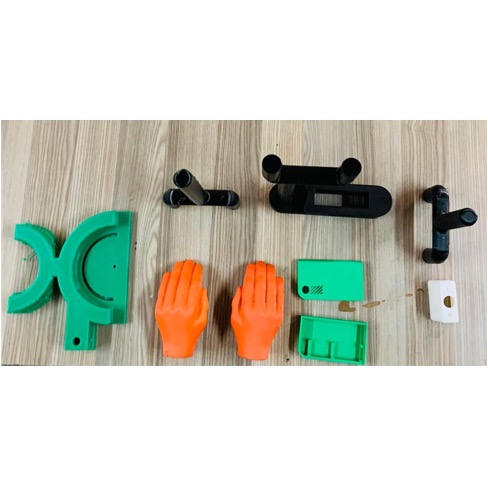
Notable projects that have passed through the Cube include the Gastro-Bag (a neonatal gastroschisis management tool built together with clinicians), and the KeyScope Laparoscope (a low-cost option for surgical visualization in low-resource hospitals) reflect the MakerSpace’s focus on building technologies that actually hold up in real clinical settings.
The Cube’s impact goes well beyond prototypes. Its biggest success story so far is CHE Innovations, a spin-out company that created NeoNest, an affordable infant transport warmer that addresses preterm hypothermia, a serious challenge at Uganda’s national referral hospital. The company has raised over USD 150,000 in global funding and been recognized by institutions like the Rice 360° Global Health Technologies Institute, the Royal Academy of Engineering, and the Ugandan Ministry of Health.
Another project out of the Design Cube, HemoSave, measures blood loss during childbirth to help catch postpartum hemorrhage early, one of the leading causes of maternal mortality. It has attracted over $10,000 in funding so far, along with support from VentureWell and Rice 360° Global Health Technologies.
Through all of this, the Design Cube has become a go-to destination for universities and organizations looking for real, hands-on engagement in global health technology. With strong partnerships, a growing set of validated prototypes, and an innovation ecosystem that keeps expanding, the Design Cube stays focused on practical solutions that strengthen healthcare systems and improve patient outcomes in Uganda, across Africa, and beyond.