The Biomedical Engineering Unit Of Makerere University
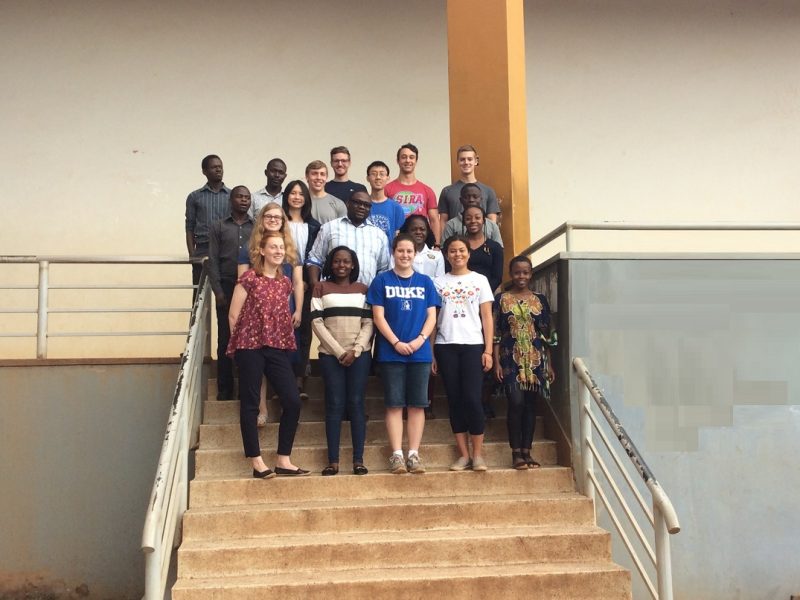
MakBME is managed under the Department of Physiology School of Biomedical Sciences at the College of Health Sciences. Since engineering courses contribute a huge fraction of the total courses in the Biomedical Engineering curriculum, the programme is secondarily homed in the Department of Electrical and Computer Engineering in the College of Engineering Design Art and Technology (CEDAT).
In each of these host departments, the BME programme has a programme co-ordinator who is the direct link between the BME students and the department. The unit is entirely dedicated to the multifaceted Biomedical engineering program does not only bolster effectiveness but also enhance efficiency of service delivery in a bid to produce thoroughly trained and exposed technology healthcare revolutionists.


The Vision
To be the leading centre of Biomedical engineering academics, innovation and research excellence in Africa.” Our vision subscribes to the Makerere University vision which is to be the leading institution for academic excellence and innovations in Africa.
The Mission
Makerere University started the program of Biomedical Engineering in 2011 in response to the rapid growth of healthcare systems and the increasing role of technology in diagnostics, therapeutics and associated research activities.
This has culminated into an increasing demand for skilled biomedical engineers both in Uganda and globally. The MakBME unit is dedicated to satisfying this demand through research, healthcare technological innovations development and translation to market, training of the next generation of healthcare technologists, consultation and clinical engineering service delivery.
The Need for BME in Uganda:
Current Works at MakBME:
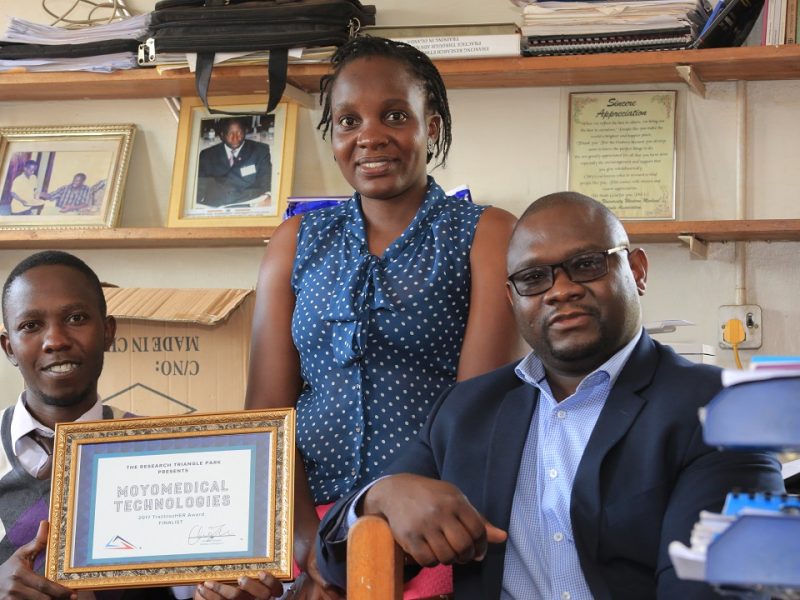
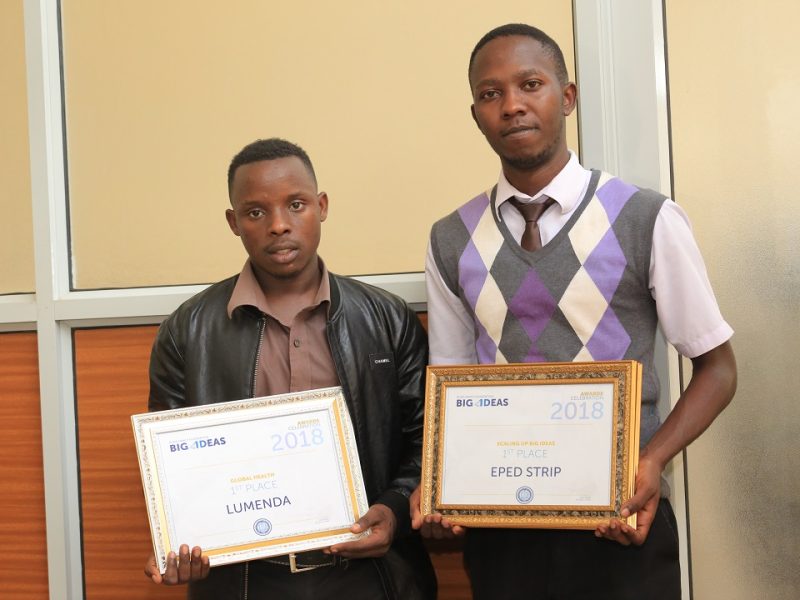
Since 2012, staff and students have globally competed in research and innovation grants, prizes and awards towards their projects. Some of these projects include the following but not limited to;
- Biomedical Engineering as a driver for improvement of quality healthcare in Africa. (GCRF Funded)
- Containing Design: Rethinking design instruction to support Biomedical Device Development for low-Income countries (Venturewell funded)
- Fit for Purpose, affordable body powered Protheses (GCRF Funded)
- Post Parterm Haemorrhage belt (GCC and Big Ideas funded)
- Early Preeclampsia Detection Strip (EPED Strip) (GCC, Big Ideas UC Berkeley and MakRIF Funded)
- Sustainable Professional Training and Mentorship for Improved Management of Medical Equipment in the Uganda Blood Transfusion Services. (THET Funded)
- Menstrual Champions (USAID/ Resilient Africa Network)
- D71: Planning grant Strengthening Ugandan Biomedical Engineering HIV/TB Human Resource Research Capacity (NIH Funded)
- UVSteriDevice: Use of UVC light as an alternative disinfection measure to reduce covid19 and nosocomial infections in Uganda (NRIP-MoSTI Funded)
- Lumenda: A device that provides an accurate and rapid method of diagnosing bacterial meningitis. (Big Ideas UC Berkely Funded)